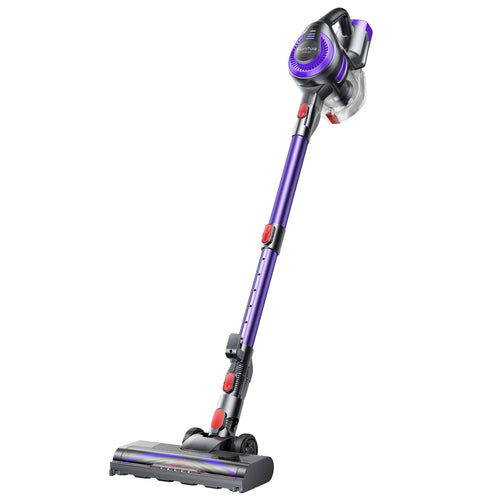
A regular vacuum mainly removes visible dirt, crumbs, and hair from your floors. A HEPA vacuum does more than that. It uses a high-efficiency filter to trap microscopic particles such as dust, pollen, pet dander, and mold spores before they are released back into the air.
If your home still feels dusty after cleaning, or if vacuuming triggers sneezing, itchy eyes, or pet allergies, the problem may not be how often you clean. It may be the type of vacuum filtration system you use.
In this guide, we'll break down the real difference between a HEPA vacuum and a regular vacuum, explain how HEPA filtration works, identify who benefits most, and outline what to look for when choosing a HEPA filter vacuum cleaner.
 What is a HEPA Vacuum?
HEPA stands for High Efficiency Particulate Air and is a specialized filter that easily captures 99.97% of particles as small as 0.3 microns. HEPA is not just a fancy label; it's an industry standard set by regulatory bodies. It is made up of different types of layers that capture every kind of particle, from dirt to dander.
HEPA vacuums significantly differ from regular vacuums. Regular vacuums often let fine particles escape into the air, whereas HEPA-filtered vacuums trap particles and prevent them from recirculating. There’s one thing you need to pay special attention to when shopping for HEPA vacuums. Oftentimes, you’ll come across vacuum cleaners with labels like HEPA-type, “99% filtration”, or HEPA-like. These are unofficial HEPA copies that cannot trap 99.97% of particles, which official HEPA filters do. These are marketed as true HEPA cleaners but fail to offer the same efficiency.
To learn about the function of HEPA filter: 《Do I Need to Choose a Vacuum with a HEPA Filter?》

How a Regular Vacuum Differs from the HEPA Filtration Vacuum
A regular vacuum without a certified HEPA system is essentially a dust circulator. To understand why, look at how a vacuum works: the high-speed motor pulls in massive amounts of dirt, debris, and air, then forces that same air out through an exhaust port.
Standard vacuums usually have mesh, foam, or paper filters. These filters pick up everyday dirt, crumbs, pet hair, and visible dust from floors and carpets. They are great for regular cleaning, but they cannot catch the smallest dust and allergens.
Tiny dust, pollen, and other small particles can pass through these filters and come back into the air through the vacuum's exhaust. So, while a standard vacuum cleans your floors well, it does not keep the air as clean as a vacuum with a True HEPA filter.
As a result, fine dust is sucked up off your carpet, blown directly through the porous filter walls, and sprayed out into the room as a highly concentrated, microscopic mist. This is known as secondary pollution. It settles back onto your clean furniture, hangs in your breathing zone, and triggers sudden sneezing fits or itchy eyes.
Furthermore, over time, allowing fine dust to pass completely unhindered through a regular vacuum lets debris accumulate inside the motor housing, degrading your machine's suction power over time.
Side by Side Comparison: Regular Vacuum vs. HEPA Vacuum
A True HEPA filter offers a higher level of filtration, durability, and overall performance than a standard or HEPA-type filter. It captures 99.97% of particles as small as 0.3 microns, which meets the filtration standard established by the U.S. Department of Energy.
Some vacuum brands also advertise 99.97% filtration, but this rating may only apply to larger particles, such as those 2 microns and above, so it does not meet the True HEPA standard.
True HEPA filtration vacuums are made with strong, high-quality materials like fiberglass or special synthetic fibers. These materials create a thick filter that catches very tiny dust, pollen, and other small particles. They also help the filter work well for a long time.
Making a True HEPA filter costs more because it uses better materials and must pass strict quality tests. HEPA-type filters are usually made with fewer materials or a simpler design, so they cost less. They are good for everyday cleaning, but they cannot trap as many tiny particles or last as long as a certified True HEPA filter.
Here’s a table highlighting the stark difference between HEPA and regular vacuums.
| Feature | Regular Vacuum | HEPA Vacuum |
| Filtration Level | Uses a standard filter that captures larger dust and debris. | Uses a True HEPA filter that captures 99.97% of particles as small as 0.3 microns. |
| Particle Size Captured | Best for visible dirt, crumbs, and larger dust particles. Fine particles may pass through the filter. | Captures fine dust, pollen, pet dander, mold spores, and other microscopic particles. |
| Allergen Handling | May release some allergens and fine dust back into the air through the exhaust. | Traps most allergens inside the filter, reducing the amount released back into the room. |
| Air Quality Impact | Cleans floors but has a limited effect on indoor air quality. | Helps improve indoor air quality by reducing airborne allergens and fine particles. |
| Best Use Case | Daily cleaning in homes without major allergy or asthma concerns. | Homes with allergy or asthma sufferers, pets, babies, or anyone who wants cleaner indoor air. |
Upgrade Your Cleaning with Honiture’s True HEPA Vacuum
If you are tired of secondary pollution and dusty exhaust air, upgrading to a certified filtration system is essential. Honiture HEPA vacuums are built precisely to bridge the gap between heavy-duty floor cleaning and indoor air purification.

Who Benefits Most From a HEPA Vacuum?
While a HEPA filter vacuum cleaner elevates indoor air health for any home, it transitions from a "nice-to-have" to an absolute health necessity for specific groups:
- People with Allergies or Asthma: Dust, pollen, and tiny allergens can make it hard to breathe. A vacuum with a True HEPA filter traps these small particles instead of blowing them back into the air. This helps keep the air cleaner and may reduce allergy and asthma symptoms.
- Pet Owners: Pet hair is easy to see, but pet dander is much smaller. It can stick to carpets, sofas, and other fabrics. A True HEPA filter traps these tiny particles, helping keep your home cleaner and fresher.
- Homes with Babies or Older Adults: Babies and older family members are more sensitive to dust and poor indoor air. A vacuum with a True HEPA filter helps remove fine dust and allergens instead of sending them back into the room. This can help create a cleaner and more comfortable home.

How to Choose the Best HEPA Filter Vacuum Cleaner
When choosing a HEPA filter vacuum cleaner, don't just fall for the word "HEPA" on the product page. Look for a sealed HEPA filtration vacuum that combines strong suction, multi-layer filtration, and easy filter maintenance. Here's what actually matters:
True HEPA, not HEPA-type
Not every filter labeled "HEPA-like" or "HEPA-style" means a real one and meets the real standard. A common misconception is that buying any machine with a "HEPA" sticker on the side guarantees pure air, but true HEPA filters must meet a certified 99.97% capture rate at 0.3 microns. "HEPA-type" or "HEPA-style" filters are marketing terms, not certified performance. Always confirm the product uses true HEPA filtration.
Fully sealed filtration system
A HEPA filter is only as effective as the vacuum body it's housed in. If a vacuum is poorly engineered, air will naturally follow the path of least resistance. Weak rubber gaskets around the filter compartment, or unsealed seams in the plastic housing, let high internal pressure force dirty air around the filter rather than through it — a problem known as air bypass. A fully sealed system ensures all the air pulled into the vacuum passes through the HEPA filter before it leaves the machine, so dust and allergens can't leak out through the exhaust and back into your home.
Strong suction power
Filtration only works if the vacuum can actually lift particles off your floors and out of fibers in the first place. Strong suction matters most on carpets, for pet hair, and in tight crevices where debris used to hide.
Multi-layer filtration
The best systems don't rely on the HEPA filter alone. A pre-filter captures larger debris before it reaches the HEPA layer, while an exhaust filter catches anything that slips through, together giving more complete filtration than a single filter could on its own.
Easy filter maintenance
Washable or replaceable filters keep the system working at full capacity and lower the long-term cost of ownership. A HEPA filter that's hard to clean or expensive to replace is one that's more likely to get neglected, which defeats the purpose of having it.

Conclusion
If you are ready to eliminate secondary dust pollution and experience what a true, fully sealed deep clean feels like, explore Honiture’s advanced cleaning lineup.
Honiture designs premium, accessible home cleaning solutions engineered around advanced multi-layer filtration. For example, the Honiture X7 features a whole-machine, fully sealed HEPA system that delivers 45 KPA of intense suction while locking away 99.97% of invisible micro-allergens.
For specialized pet homes, the Honiture P7 Pro steps up your routine with a robust 7-layer high-efficiency filtration matrix alongside a unique built-in aromatherapy diffuser to eliminate pet odors at the source.
Don't just shift dust around your home; lock it away for good. Browse the Honiture Cordless Vacuum Range today to find the perfect match for your lifestyle.
Frequently Asked Questions
Is a HEPA vacuum worth buying?
Yes, it can be a good investment, especially if you want cleaner air in your home. A regular vacuum picks up dust and dirt from the floor, but a HEPA vacuum also traps tiny particles like pollen, pet dander, and fine dust. This helps keep more of these particles out of the air, making your home cleaner and more comfortable.
Can I wash a HEPA filter?
It depends on the vacuum model. Some HEPA filters are washable, while others must be replaced when they become dirty. Always check your vacuum's user manual before washing the filter.
If your filter is washable, rinse it with cold water, let it air dry completely, and put it back only when it is fully dry. If it is not washable, replace it as recommended by the manufacturer to keep your vacuum working well.
Does a HEPA filter remove pet dander?
Absolutely. Pet dander particles typically range from 1 to 10 microns in size, which puts them safely within the capture field of a certified HEPA filtration system (which stops particles down to 0.3 microns).
What exactly does "0.3 microns" mean?
A micron is short for a micrometer, which is one-millionth of a meter. The 0.3-micron size point is designated by scientists as the "Most Penetrating Particle Size" (MPPS). Particles larger than 0.3 microns are heavy enough to smash into the filter fibers and get stuck, while particles smaller than 0.3 microns bounce around erratically via Brownian motion and get trapped by static attraction. The 0.3-micron size is the hardest to trap, which is exactly why the HEPA standard uses it as the ultimate benchmark.
Is a HEPA vacuum better than a regular vacuum?
Yes, a HEPA vacuum is better for trapping fine particles such as dust, pollen, pet dander, and mold spores. A regular vacuum is usually enough for visible dirt, but it may release smaller particles back into the air.
What is the difference between a HEPA vacuum and a HEPA filter vacuum cleaner?
They usually refer to the same type of product. A HEPA filter vacuum cleaner is a vacuum equipped with a HEPA filter, while a HEPA vacuum often refers to a vacuum with a True HEPA or sealed HEPA filtration system.
Do HEPA vacuums help with pet allergies?
A HEPA vacuum can help trap pet dander, hair, and fine dust, which may make the home feel cleaner for pet owners. For best results, choose a sealed HEPA filtration vacuum and clean carpets, sofas, and pet areas regularly.