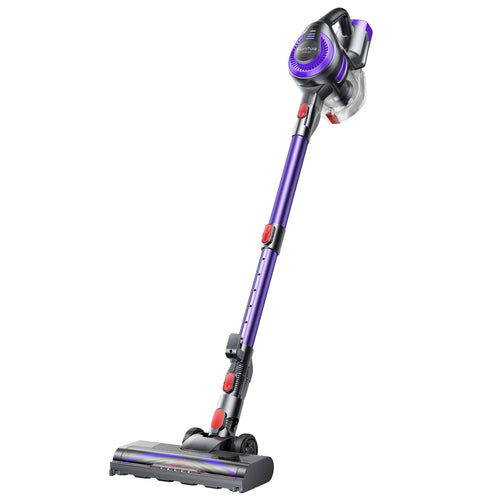
In the realm of daily household maintenance, the most agonizing pain point is rarely a lack of time—it is the sheer inadequacy of our cleaning tools. Countless households, when making their initial investment in a cordless handheld vacuum, often find themselves confronting a maddening reality: weak suction, stubborn debris left stranded on the floor, and the embarrassing phenomenon of dust leaking right back into the air. Suction power is the uncompromising soul of any vacuum cleaner; it is the single most critical metric that dictates your cleaning efficiency.
However, navigating today’s saturated market can be treacherous. Faced with a dizzying array of models, consumers are easily blinded by flashy secondary features or exaggerated marketing claims, ending up with a handheld vacuum cordless that looks sleek but performs poorly. To help you break free from the cycle of ineffective cleaning, this article dives deep into the underlying mechanics of vacuum operation. By unpacking the root causes of suction loss and decoding professional performance metrics used in North American and European markets, we will reveal how to accurately identify and select a truly powerful machine that transforms your daily chores from a burden into a breeze.

Why Do Vacuums Lose Suction Power Over Time?
A sudden drop in suction or chronically weak performance is rarely the fault of a single broken part. Rather, it is a complex, systemic failure involving aerodynamics, motor engineering, and the machine's internal filtration architecture. Many users notice that their vacuum performs admirably out of the box, only to experience a cliff-drop in effectiveness after just a few months. To solve this, we must look under the hood and understand where the negative pressure is bleeding out. Specifically, weak suction is generally caused by the following critical bottlenecks:
- Cyclonic Separation Failure and Clogged Filters (The #1 Culprit): Budget vacuums often lack advanced, multi-cone cyclonic separation technology. Without sufficient centrifugal force to separate microscopic dust from the air, fine particles bypass the dustbin and slam directly into the HEPA filter. Once the microscopic pores of the filter become caked with debris, the airflow pathway is entirely choked off, resulting in an instant and massive drop in suction power.
- Motor Bottlenecks and Physical Degradation: Devices that still rely on outdated brushed motors or low-RPM (revolutions per minute) components fundamentally lack the baseline static pressure required for deep cleaning. Furthermore, as the carbon brushes inside these older motors physically wear down over time, their power output suffers a permanent, irreversible decline.
- Compromised Airway Sealing: A vacuum is an intricate, sealed ecosystem that relies entirely on negative pressure. If the rubber gaskets around the dustbin, the connection joints of the extension wand, or the seals near the motorized brush head begin to age or crack, air will leak into the machine. This internal bleeding drastically weakens the actual pulling force that reaches the floor.
- Battery Voltage Sag: Inferior lithium-ion battery packs struggle to maintain a consistent electrical output. When the battery charge drops below 50%, the discharge current shrinks significantly. If the power supply falters, the motor RPM drops in tandem, leaving you with a machine that sounds weak and performs even worse.

Decoding Suction Needs: How Much Power Does Your Floor Actually Require?
Discussing suction power without context often leads to chasing meaningless numbers on a spec sheet. Different flooring materials offer wildly different levels of resistance and dust adhesion. While smooth hard floors only require overcoming weak static cling, the tangled fibers of a thick carpet act like thousands of tiny claws gripping onto dirt and pet hair. Savvy consumers match their machine's capabilities to their home's specific high-traffic scenarios to strike the perfect balance between raw power and battery efficiency.
- Hardwood and Tile Floors (Low Resistance): A suction range of 10 to 15 kPa is generally more than enough. This level of negative pressure effortlessly lifts surface dust, loose human hair, dry pet kibble, and scattered crumbs without excessive battery drain.
- Low-Pile Carpets and Area Rugs (Medium Resistance): It is highly recommended to use a machine capable of 15 to 25 kPa. Carpet loops inherently create drag and trap smaller particles. You need moderately strong suction to reach just below the surface layer and extract embedded dander and dirt.
- High-Pile Carpets and Deep Mattress Mite Removal (High Resistance): This requires an extreme baseline of 25 to 30 kPa or significantly higher. This is the ultimate stress test for any vacuum. It requires immense, penetrating negative pressure combined with the high-speed mechanical agitation of a brush roller to dislodge mud, sand, and allergens buried deep within the dense textile base.

European and US Suction Standards: What Defines a High-Powered Vacuum?
In professional appliance testing across Western markets, measuring static pressure (kPa) alone does not paint the full picture of a machine's capabilities. The industry standard heavily favors Air Watts (AW) as a holistic performance metric. While kPa measures pure suction force (how heavy an object it can lift), AW combines that pressure with Airflow (CFM - Cubic Feet per Minute), which indicates how much air is constantly moving through the machine. While there is no perfect linear conversion between the two due to varying internal duct designs, we can use industry benchmarks to establish clear performance tiers:
- Entry-Level (Light Duty): Under 150 AW (Roughly equivalent to 10-20 kPa). These models are strictly for small apartments or simple daily touch-ups on bare floors.
- High-Performance Tier (high powered cordless vacuum): 150-200 AW (Roughly 20-30 kPa). Machines in this class boast excellent all-around utility, easily tackling thick carpets, stubborn pet hair, and heavy debris without breaking a sweat.
- Flagship Tier (most powerful cordless vacuum): Over 200 AW (Typically pushing 30+ kPa and beyond). This represents the absolute pinnacle of consumer suction technology. When a model's static pressure breaches the 40 kPa mark, it transcends standard home use, offering industrial-grade deep-cleaning potential.
*How to calculate vacuum cleaner suction power
The Industry Disruptor: Why the Honiture P7 Pro is Our Top Recommendation
When searching for a machine that shatters traditional performance boundaries, the Honiture P7 Pro emerges as a dominant force in the market. It successfully dismantles the long-standing engineering wall that forced consumers to choose between extreme suction and acceptable battery life. As a premier powerful cordless stick vacuum, the P7 Pro leverages intelligent power management systems to elevate the cleaning experience to unprecedented heights. It stands as an elite powerful cordless vacuum, easily neutralizing the most demanding messes across any terrain. It sets a new benchmark across three core dimensions:
50kPa Hurricane-Level Suction: The P7 Pro delivers an awe-inspiring 50kPa of maximum static pressure—a figure that thoroughly eclipses the industry average. This staggering raw power means it offers crushing dominance over any cleaning obstacle. Whether pulling microscopic flour dust from the grout lines of your kitchen tiles or ripping embedded pet hair from the deepest layers of a shaggy rug, this 50kPa force ensures one-pass perfection.

80-Minute Marathon Runtime with Fade-Free Power: The Achilles' heel of most high-suction models is severe battery anxiety. The P7 Pro counteracts this with a high-density power cell array managed by an advanced BMS (Battery Management System). It offers a staggering 80 minutes of continuous runtime on Eco mode. More importantly, it provides a perfectly flat discharge curve—meaning whether you are at 100% battery or 10%, the motor delivers maximum rotational speed without the dreaded fade, allowing you to deep-clean a massive home in a single session.
All-Terrain Adaptability and Smart Interface: Raw power means nothing without control. The P7 Pro features an intelligent touch-screen display for real-time monitoring of battery life, suction modes, and filter maintenance alerts. Coupled with an anti-tangle floor brush equipped with LED headlights, it transitions seamlessly from delicate hardwoods to thick carpets, illuminating and destroying dust in the darkest corners of your home.
Engineering Excellence: What Makes a Vacuum Truly Powerful?
Building a formidable vacuum requires much more than simply stuffing a massive motor into a plastic tube. A genuine powerful cordless vacuum operates as a highly precise, synchronized physical system. From the moment the brush head touches the floor to the second the dust is trapped in the bin, every millimeter of the airflow pathway must be aerodynamically optimized. Top-tier machines must possess the following architectural features:
- Ultra-High-Speed Brushless Motors: The beating heart of the machine must be a digital brushless motor spinning at an excess of 100,000 RPM. This is the fundamental physical prerequisite for generating explosive vacuum pressure.
- Multi-Cone Cyclonic Separation: Suction must be sustainable to be useful. Premium models use complex multi-cone cyclone arrays that create miniature tornadoes inside the dustbin. This utilizes immense G-force to fling 99% of fine dust out of the air stream before it ever reaches the filter, ensuring the HEPA system remains pristine and suction never drops.
- Linear Aerodynamic Airflow: The internal ductwork—from the floor head up through the extension wand and into the motor—must be engineered in a straight line. Minimizing sharp bends and labyrinthine curves drastically reduces air friction and prevents kinetic energy loss.
- High-Discharge Lithium-Ion Arrays: Massive motors demand massive, instant electrical currents. Only top-tier battery cells capable of sustained high-amperage discharge can keep a high-RPM motor running at peak load without triggering thermal shutdown.

Essential Considerations Before Making Your Purchase
Even armed with technical knowledge, consumers must remain vigilant against clever marketing tactics. Brands often highlight single data points recorded under laboratory conditions, but true everyday usability is defined by the machine's weakest link. Beyond simply chasing the highest suction number, you must evaluate ergonomics, accessory ecosystems, and filtration safety to ensure you are buying a long-lasting household asset rather than an expensive liability.
- Beware the "Max Mode" Trap: Do not base your decision solely on a vacuum’s maximum suction rating. You must verify exactly how many minutes the battery lasts while operating in that peak mode. A truly superior machine should possess enough baseline power to handle 90% of your daily chores on its standard or eco settings, reserving the maximum power exclusively for extreme spills.
- Synergy of the Brush Head: Infinite suction is useless if the brush head cannot agitate the floor properly. Ensure the vacuum comes with a specialized anti-tangle V-shaped roller or a stiff carbon-fiber bristle brush for carpets. The mechanics of the floor head dictate actual dust pickup just as much as the motor itself.
- Ergonomics and Weight Distribution: Tremendous power usually implies heavier motors and larger battery packs. Look for designs where the motor and battery are aligned near the handle (rear-weighted balance). This ergonomic center of gravity prevents wrist fatigue when pushing the unit for an hour or lifting it to clean ceiling cobwebs.
- Absolute HEPA Sealing: A high-powered motor expels air with aggressive force. If the vacuum chassis is not 100% sealed with a multi-stage HEPA filtration system, the microscopic allergens you just vacuumed up will be violently blasted back into your living space, creating secondary air pollution that is worse than not vacuuming at all.
Conclusion
In our fast-paced modern lives, a premium cleaning appliance should act as a time-saving liberator, not a high-maintenance chore in itself. While the marketplace is flooded with visually appealing options, the only machines capable of permanently solving the nightmare of "weak suction and leftover dirt" are those built upon rigorous motor engineering, fluid dynamics, and advanced battery management. Investing in a marvel of engineering like the Honiture P7 Pro—armed with its unrelenting 50kPa of suction—does more than just elevate your floor's physical cleanliness. It fundamentally revolutionizes your approach to home maintenance, granting you the luxury of effortless, one-pass cleaning and restoring a deeply purified, allergen-free environment for your family.
FAQs
What is the real difference between kPa and AW on a vacuum spec sheet, and which should I care about more?
They measure two different physics principles. kPa (kilopascals) measures static pressure, or pure lifting force—essentially how heavy a single object the vacuum can pull upwards (like a steel ball bearing). AW (Air Watts) combines that static pressure with airflow volume (CFM), indicating the machine’s ability to keep air moving smoothly when inhaling large quantities of dust. You should consider both; however, a machine boasting over 30kPa or 200AW is universally recognized as offering elite, flagship-level performance.
Why did my vacuum lose almost all its suction power after just a few months of normal use?
In 95% of cases, this is caused by severe filter clogging due to poor cyclonic separation. If the machine cannot spin fine dust out of the air, the microscopic powder immediately embeds itself into the HEPA filter's fibers, acting like a concrete wall that blocks airflow. To fix this instantly, wash your HEPA filter thoroughly with water, let it dry completely for 24 hours, and consider upgrading to a multi-cone cyclonic model in the future.
Will an extreme suction power of 50kPa damage or scratch my delicate hardwood floors?
Absolutely not. Suction power itself does not scratch floors; the physical friction of the brush roller does. Premium high-suction models utilize a soft-roller brush head made of woven nylon and anti-static carbon fiber. This ultra-soft material glides safely over engineered wood, polishing the surface while the intense negative pressure safely extracts dust from the crevices.
I have multiple shedding pets. What is the most important feature for picking up excessive hair?
While you need a solid baseline suction of at least 20 kPa to pull the hair through the wand, the absolute most critical feature is an active anti-tangle brush roll. Look for V-shaped bristle layouts, built-in detangling combs, or oversized rollers. Without these physical detangling mechanisms, pet hair will tightly wrap around the axel, seize the motorized brush, and render the massive suction completely useless.
How long do cordless vacuum batteries actually last before they need replacing?
High-quality lithium-ion power packs are designed to last for roughly 300 to 500 full charge-discharge cycles. For an average household, this equates to about 2 to 3 years of use before you notice a meaningful drop in maximum runtime. To protect your investment, always prioritize buying vacuums with a detachable, click-in battery design so you can easily swap in a new pack without having to replace the entire vacuum.
Doesn't a high-powered motor mean the vacuum will be unbearably loud and disruptive?
It is true that higher RPMs generate more wind shear, but premium manufacturers engineer around this. Top-tier vacuums utilize advanced acoustic noise-canceling techniques, including sound-absorbing foam wrapped around the motor, suspended shock mounts to reduce vibration, and streamlined exhaust vents to eliminate high-frequency whistling. In standard modes, the noise level is usually kept to a highly manageable 70 to 80 decibels.
Can a cordless stick vacuum truly deep-clean thick, dense wool area rugs?
Yes, but the barrier to entry is exceptionally high. You cannot rely on a budget model. You must utilize a high-end machine outputting 25-30kPa or more (such as the 50kPa Honiture P7 Pro). Crucially, you must pair that suction with a dedicated, stiff-bristle carpet roller powered by its own independent motor. It requires the physical, high-speed beating of the carpet fibers to shake the dirt loose before the extreme suction can extract it.